
Mechanical Properties of Engineering Plastics
Mechanical Properties of Engineering Plastics
Strength and Toughness
One of the most important mechanical properties of engineering plastics is their strength, which refers to the material's ability to withstand an applied force without breaking. Strength is crucial in applications where the plastic will be subjected to heavy loads or impacts. For instance, polycarbonate sheets are renowned for their high impact resistance and strength, making them an ideal material for safety helmets and protective glazing.
Toughness, on the other hand, is a measure of a material's ability to absorb energy and plastically deform without fracturing. Engineering plastics like Acrylonitrile Butadiene Styrene (ABS) exhibit excellent toughness, which is why they are widely used in applications requiring durability, such as automotive interiors and consumer electronics.
Wear Resistance
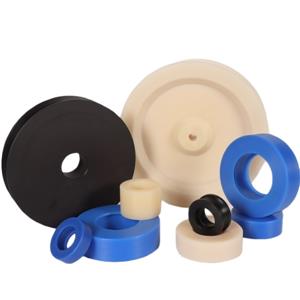
Wear resistance is another critical mechanical property, particularly in applications involving moving parts that are subject to friction. Engineering plastics such as acetal plastic products and UHMWPE plastic are highly valued for their low friction coefficients and good wear resistance. Acetal plastic products, also known as POM, are often used in gears, bearings, and other components where long-term durability and smooth operation are essential.
Dimensional Stability
Dimensional stability refers to the ability of a material to maintain its size and shape under varying environmental conditions, such as changes in temperature and humidity. Engineering plastics like cast nylon sheets and PTFE plastic are prized for their excellent dimensional stability. This property is particularly important in precision applications, such as in the manufacture of mechanical parts where exact dimensions are critical to the product's performance.